






• Latest
  • All
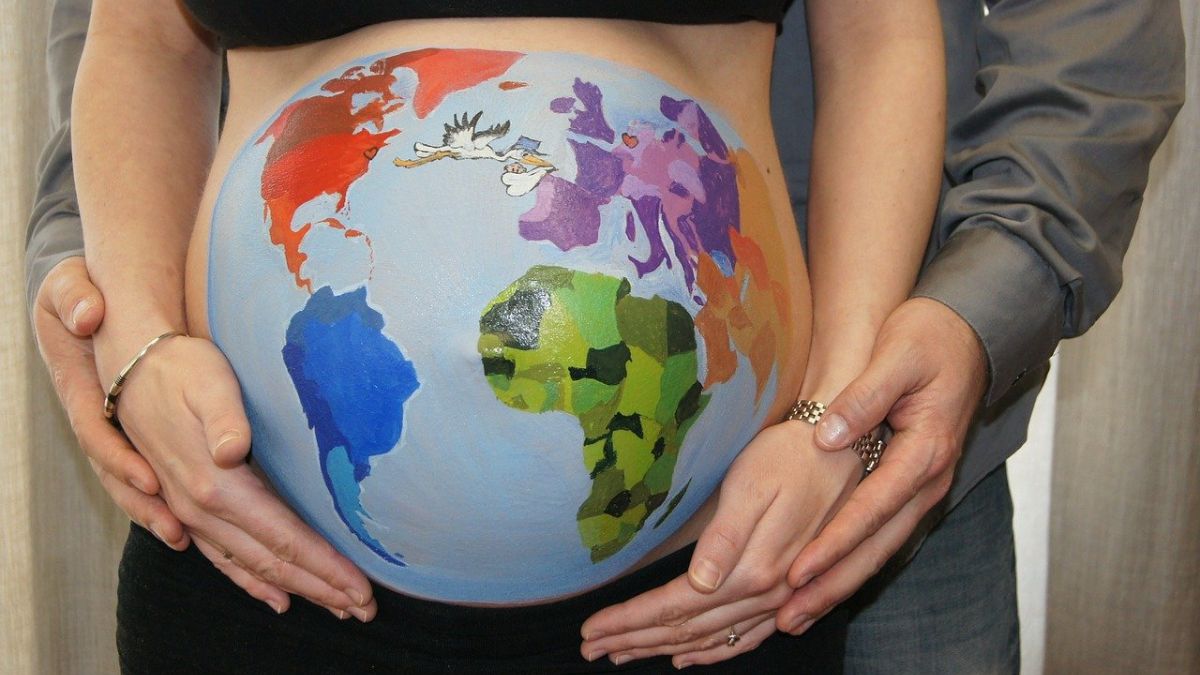
Image from Pixabay

Have more children to save the planet

January 12, 2022
Roe No More – One Year After Dobbs

Single men “buying babies” in the UK under surrogacy laws

September 8, 2026
US Appeals Court Panel Finds “No Authority” Requiring Trans Pronouns

Ottawa admits trans inmates transferred to women’s prisons faced sexual assault charges

September 7, 2026
The March for Life: Fifty years of advocacy for the unborn and the culture of life

Thousands join March for Life in London as abortion debate intensifies

September 7, 2026
Liechtenstein parliament backs abortion legalization, but Prince vows veto

Liechtenstein parliament backs abortion legalization, but Prince vows veto

September 7, 2026
BREAKING: Historic Court Hearing Scheduled Challenging Critical Race Theory Indoctrination

Bulgaria’s top court orders legal gender changes on ID documents

September 5, 2026
University warns professor after he speaks out against assisted suicide

University warns professor after he speaks out against assisted suicide

September 2, 2026
Nova Scotia’s last Catholic hospital loses protections against abortion and euthanasia

Nova Scotia’s last Catholic hospital loses protections against abortion and euthanasia

September 2, 2026

Spain investigates suspected surrogacy network using birthright citizenship loophole

September 1, 2026
Trump administration forces Kansas school district to end secret gender transition plans

Trump administration forces Kansas school district to end secret gender transition plans

September 1, 2026
More than 100 British children referred to government over suspected forced marriages

More than 100 British children referred to government over suspected forced marriages

August 31, 2026
  • About iFamNews
  • Contact

Navigation Button Subscribe

  • Subscribe
September 8, 2026
  • Login
  • Register
No Result
View All Result
  • English
    • Italiano
    • Español
    • Français
    • Deutsch
    • Polski
    • српски
    • Русский
    • Hrvatski

Navigation Button Donate

  • Donate
International Family News Network (IFN)
  • Home
  • Opinion
  • Life
  • Family
  • Culture
  • Politics
  • Entertainment
  • Science
  • Shows
  • Petitions
  • Subscribe
  • Donate
International Family News Network (IFN)
  • Home
  • Opinion
  • Life
  • Family
  • Culture
  • Politics
  • Entertainment
  • Science
  • Shows
  • Petitions
  • Subscribe
  • Donate
No Result
View All Result
International Family News Network (IFN)
No Result
View All Result

Have more children to save the planet

Against neo-Malthusianism: giving birth to fewer children would have virtually no effect on the environment; rather, it would have a profound economic, social and geopolitical impact.

Federico Cenci by Federico Cenci
January 12, 2022
in Foreground, Life, Science
1.5k
Reading Time: 4 mins read
0
Image from Pixabay

Image from Pixabay

Share on FacebookShare on WhatsAppShare on TelegramShare on TwitterShare on WeChat

Last updated on January 13th, 2022 at 01:51 pm

To save the planet, we need to have more children. The appeal of Rémy Verlyck, CEO of the French study centre Familles Durables, reverses the paradigm of a certain radical environmentalism. While some neo-Malthusians continue to claim that “children are the worst thing you can do for the environment,” fortunately there are also those who put their faith in life.

Reversing a paradigm

“In the context of ‘eco-anxiety’ and collapsing confidence in the future, more and more people are losing their taste for life and are giving up or hesitating to procreate,” Verlyck notes in his piece for the French newspaper Le Figaro. Yet, he continues, “it seems that giving birth to fewer children would have virtually no effect on the environment.” Indeed, denatality could “slow the pace of innovation needed for the ecological transition.”

What is “eco-anxiety”?

In the article, Verlyck cited a study by the Catholic University of Leuven conducted in 2021 with 2,080 participants from eight countries in Europe and Africa. The study concluded that 12% of participants are affected by “eco-anxiety” or obsessive concern about environmental pollution. Without establishing a link with the level of education, it can be seen that women and persons under 40 are more affected, i.e. precisely the two categories that can represent a demographic driver.

Another study in 2021, conducted by the University of Bath, looked at 10,000 young people in 10 countries and attested that 84% said they were concerned about global warming, 59% were extremely concerned and 40% were so concerned that they were hesitant to procreate. In short, almost one in two young people are dissuaded from having children because of climate warnings. These two studies, Verlyck points out, show that environmental changes affect not only our habitat, but also the psyche of many of us.

No children, no ecological transition

A robust psychological impact is assumed by the various prophets of denatality as a form of environmental protection. According to them, procreation is bad for the planet, as children are sources of huge carbon emissions into the air. Verlyck notes, however, that the world population is already set to decline in the coming decades. In this regard, the French columnist cites a study published in The Lancet in 2020: the peak would be reached in 2064 with about 9.7 billion human beings, and then decrease to 8.8 billion at the end of the century.

Italy halved

To get an idea of the possible demographic imbalances, it is necessary, however, to shift the objective of the analysis from the general picture to the specific one: 23 countries would even see their population halved. These include Spain, Japan and Italy. The study notes that the aging and shrinking working-age population will hamper overall economic growth and, consequently, the ability to finance the innovation needed for the green transition.

A sterile Europe

But the situation is worrying all over Europe. An article in Le Figaro reported on the Robert Schuman Foundation’s 2018 forecasts with the eloquent title Europe 2050: demographic suicide. The Old Continent could lose 49 million people of working age in 20 years. “With a total fertility rate of close to 1.5, Europe will tomorrow have by one-third fewer generations of young workers than it does today,” it reads. “For a country, a decrease in the number of births is the equivalent of a decrease in investment for a company; this allows it to benefit from a more comfortable cash flow for a while, at the cost of serious problems later on.”

Repercussions

Verlyck then comes to a conclusion: “Not only does depriving oneself of procreation have almost no impact on climate change, but the aging of the population will have a profound economic, social and geopolitical impact by reducing the capacity to respond.” The risk, however, is that by the time we realize it, it will be too late.


Tags: birth rateBreaking NewsChildrendemographydenatalityeco-anxietyEconomyenvironmentalismForeground
Federico Cenci

Federico Cenci

Federico Cenci worked from 2013 to 2017 at the Catholic Zenit press agency dealing with social and religious issues, bioethics, family policies, as well as domestic and international politics. He then continued his business with In Terris, and currently with various newspapers and periodicals. In 2020 he wrote the novel "East Berlin 2.0 - Notes between dystopia and reality"

Discussion about this post

Popular News

  • Two 14-year-old girls die after coerced illegal abortions in India

    Two 14-year-old girls die after coerced illegal abortions in India

    1 shares 39 VIEWS
    Share 0 Tweet 0
  • Singapore offers families financial support as birth rate hits record low

    0 shares 37 VIEWS
    Share 0 Tweet 0
  • NIH-funded study finds bone and heart risks from transgender treatments for youth

    0 shares 31 VIEWS
    Share 0 Tweet 0
  • More than 100 British children referred to government over suspected forced marriages

    0 shares 26 VIEWS
    Share 0 Tweet 0
  • University warns professor after he speaks out against assisted suicide

    0 shares 22 VIEWS
    Share 0 Tweet 0

IFN – International Family News Network

© 2022 IFN – International Family News - All Rights Reserved.

Quick Links

  • About iFamNews
  • Contact Us
  • Privacy Policy

Follow Us

Welcome Back!

Login to your account below

Forgotten Password? Sign Up

Create New Account!

Fill the forms below to register

All fields are required. Log In

Retrieve your password

Please enter your username or email address to reset your password.

Log In
Subscribe

No Result
View All Result
  • Home
  • Opinion
  • Life
  • Family
  • Culture
  • Politics
  • Entertainment
  • Science
  • Shows
  • Petitions
  • Subscribe
  • Donate

  • en English
  • it Italiano
  • es Español
  • fr Français
  • de Deutsch
  • pl Polski
  • sr српски
  • ru Русский
  • hr Hrvatski
  • Login
  • Sign Up

© 2022 IFN – International Family News - All Rights Reserved.