









Last updated on March 12th, 2026 at 02:34 pm
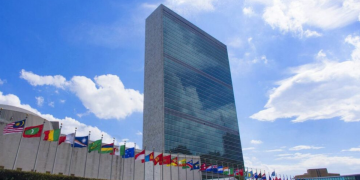
The following statement, joined by organizations around the world, was provided to all United Nations ambassadors in advance of the Commission for Social Development, February 2-10, 2026
For Equality, Development, and Peace:
Religious Freedom for All
Dear Excellency:
As the 2026 Commission for Social Development addresses its priority theme of “Advancing Social Development and Social Justice through Coordinated, Equitable, and Inclusive Policies,” we recall the following statement in paragraph 24 of the Beijing Platform for Action.
The right to freedom of thought, conscience and religion is inalienable and must be universally enjoyed…. In order to realize equality, development and peace, there is a need to respect these rights and freedoms fully. Religion, thought, conscience and belief may, and can, contribute to fulfilling women’s and men’s moral, ethical and spiritual needs and to realizing their full potential in society.
The first express mention of this right in United Nations documents is in the Universal Declaration of Human Rights, whose opening lines speak in broad terms:
Whereas recognition of the inherent dignity and of the equal and inalienable rights of all members of the human family is the foundation of freedom, justice and peace in the world…
Later comes this articulation of a core inalienable right arising from the inherent dignity of every human being:
Everyone has the right to freedom of thought, conscience and religion; this right includes freedom to change his religion or belief, and freedom, either alone or in community with others and in public or private, to manifest his religion or belief in teaching, practice, worship and observance.
Although this language does not appear until Article 18, the right it describes is not merely one among many, nor was its recognition by the United Nations something new. According to John Humphrey, a drafter of the UDHR and the first director of the UN Human Rights Division,
Freedom of religion is indeed the oldest of the international recognized human freedoms and therefore the one with which the international community has had the longest experience.
And its widespread emphasis in human rights instruments is duly impressive, noted Professor Cole Durham.
The ideal of religious liberty… is expressly recognized in every major international human rights declaration and covenant, as well as in the overwhelming majority of the world’s constitutions.
In the International Covenant on Civil and Political Rights, for example, the parties undertake to “promote universal respect for, and observance of,… the right to freedom of thought, conscience and religion” for everyone. But implementation is another matter, as recently pointed out by US Secretary of State Marco Rubio.
Hundreds of millions of people of faith around the world face threats of violence, imprisonment, and death for simply living out their faith. Religious persecution destabilizes countries, undermines hope for peace, and attacks a core truth recognized by [America’s] Founding Fathers.
The irony is that when any nation denies or fails to protect religious freedom, it undermines not only the inalienable rights of its citizens but also its own success. In 2013, the president of the Human Rights Commission in Geneva quoted what Pope John Paul II had said decades earlier on the World Day of Peace.
Religious freedom, an essential requirement of the dignity of every person, is a cornerstone of the structure of human rights and for this reason, an irreplaceable factor in the good of individuals and of the whole society.
Professor Robert P. George, a recipient of the Canterbury Medal for religious liberty, has warned,
Countries that protect religious liberty are more secure and stable than those that do not, and nations that trample on this freedom provide fertile ground for war and poverty, terror and radical movements. In other words, religious freedom abuses not only violate the core of our humanity, but also do grave harm to the well-being of societies.
Another recipient of the Canterbury Medal, President Dallin H. Oaks, declared at the 2022 Notre Dame Religious Liberty Summit,
I call for a global effort to defend and advance the religious freedom of all the children of God in every nation of the world.
We are convinced that answering this call is indispensable to achieve the goals of this year’s Commission and to enable the development, equality, and peace so urgently needed in our world.
Respectfully,
International Organization for the Family
United Families International
Center for Family and Human Rights
Universal Peace Federation
American Family Advocates
Worldwide Organization for Women
Latin American Alliance for the Family
Family Policy Institute, South Africa
REAL Women of Canada
HazteOir, Spain
CitizenGO, Spain
Family First, New Zealand
FamilyPolicy.RU Advocacy Group, Russia
Native American Fatherhood & Families Association





Discussion about this post